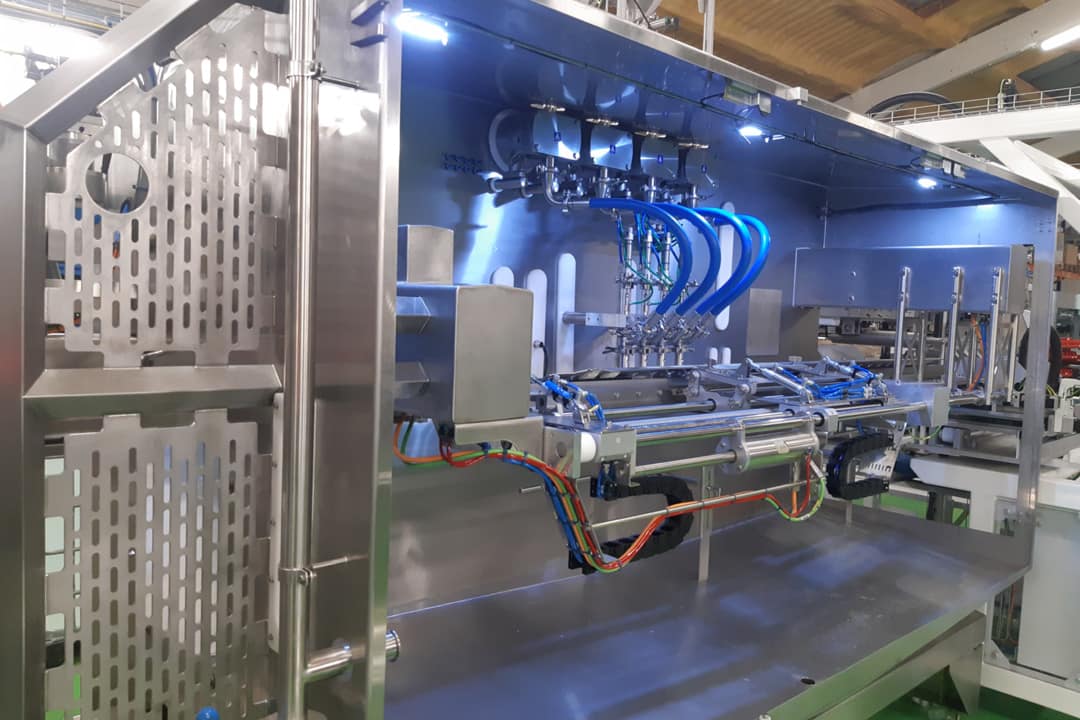
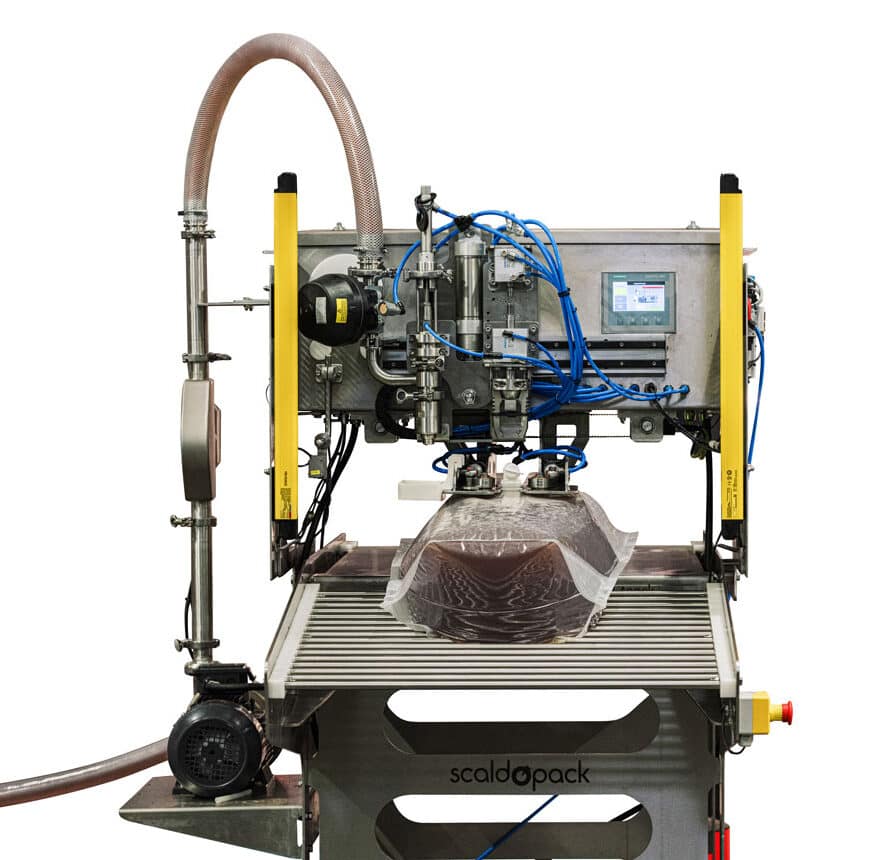
Pumps and dosing systems
The right filling system starts with your product.
Explore pumps and flowmeters for pouch filling. Scaldopack matches product supply, dosing and cleaning to what you fill, how you package it and how you produce.
Which filling system suits your product?
Every formulation places different demands on a filling system. We match product supply, dosing and filling to your product, packaging and production process.
What are you filling?Viscosity at filling temperature, particles, foaming and sensitivity to handling all influence the product path.
What does each pack need?Tell us the volume or mass per pack, required output and the pouch, spout or container format.
How do you produce?Product supply, cleaning, allergens and changeovers determine how the system fits into your operation.
Compare pump options.
Start with the role the pump needs to fulfil. Explore the selection points, then discuss the complete configuration with Scaldopack.
- Piston pumps — Controlled volumetric dosing. Key selection points: Filling range, product feeding, valve passage, cleaning.
- Lobe pumps — Gentle product handling and supply. Key selection points: Texture, particles, inlet conditions, seals.
- Centrifugal pumps — Transfer of relatively free-flowing liquids. Key selection points: Flow, pressure, viscosity, priming.
- Diaphragm pumps — Transfer from tanks, drums or IBCs. Key selection points: Materials, pulsation, air consumption, particle passage.
- Peristaltic pumps — Filling through a replaceable pump tube. Key selection points: Tubing compatibility, filling quantity, throughput, tube life.
- Twin screw pumps — Varying viscosity, fragile product particles, transfer and CIP duties. Key selection points: Viscosity, temperature, particles, flow, pressure, seals, cleaning and system performance.
These are options to discuss. The final choice and available configurations depend on your product and machine. A supply pump works with the selected dosing controls; its flow alone does not define the filled quantity.
Pump options for your filling machine.
The pump, valves, hoses, nozzle and spout form one product path. Each part contributes to how your product reaches the pack.
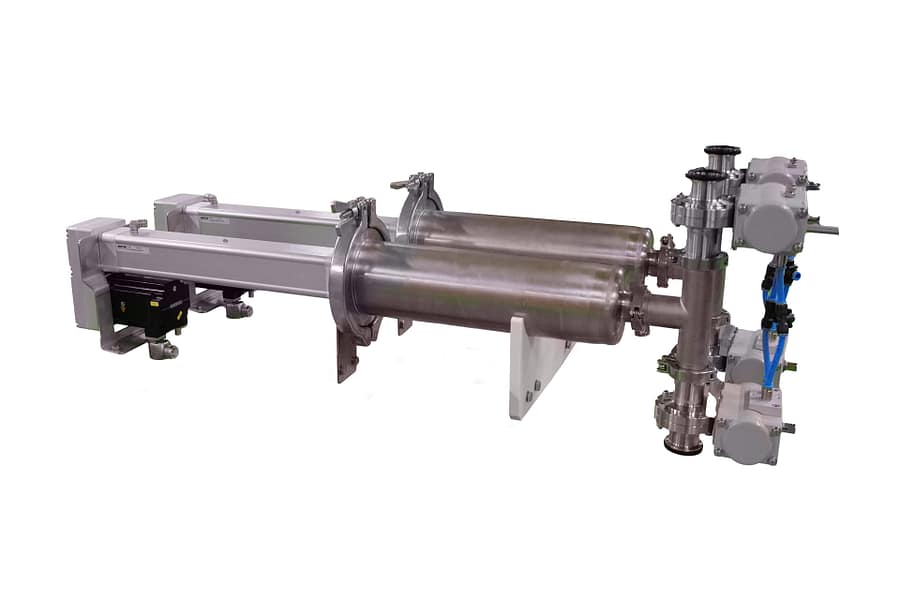
Piston pumps
A piston draws product into a cylinder and pushes a controlled volume towards the filling nozzle. It is an option to assess for liquids, sauces, syrups, creams and viscous formulations.
Cylinder size, product supply and the passages through valves, nozzle and spout determine how the system fits your application.
Selection & cleaning considerations
- Match cylinder size and cycle to the required dose and output.
- Assess direct supply, a hopper or assisted product feeding.
- Check particle passage and product sensitivity throughout the system.
- Define cleaning access, seal inspection and changeovers for the specified assembly.
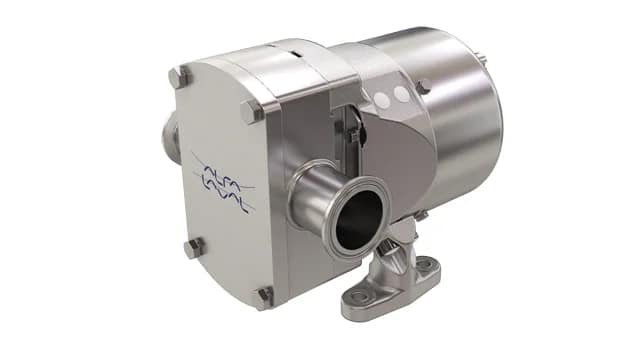
Rotary lobe pumps
Synchronised rotors move product through the pump housing. Rotary lobe configurations can suit applications where product texture and a continuous supply are important.
Product viscosity, particles, inlet conditions and the cleaning arrangement guide the selection.
Selection & cleaning considerations
- Assess texture, particle characteristics and sensitivity to shear.
- Match inlet conditions, flow and pressure to the process.
- Select seals and wetted materials for the formulation.
- Define and verify the complete cleaning circuit.
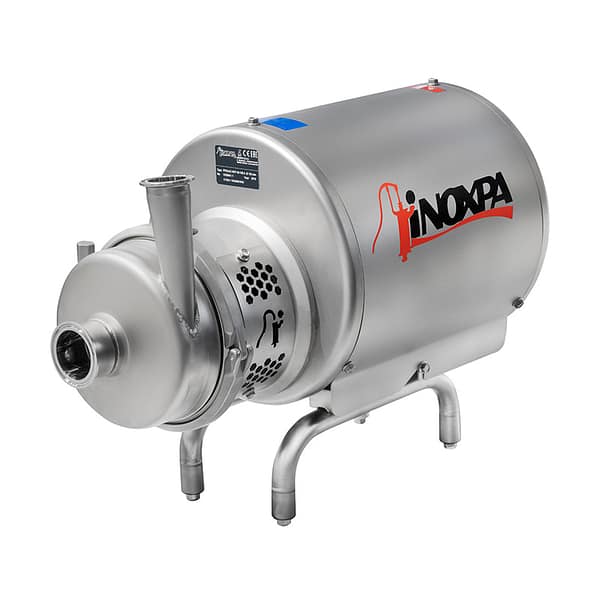
Centrifugal pumps
A rotating impeller moves the product towards the filling system. Centrifugal pumps can suit relatively free-flowing liquids such as beverages and suitable water-based products.
Select the pump against the required flow and pressure, using the product’s actual operating conditions.
Selection & cleaning considerations
- Evaluate changes in performance with viscosity and pressure.
- Confirm priming and supply requirements for the selected model.
- Account for air and sensitivity to product handling.
- Pair supply with suitable measurement and dosing controls.

Diaphragm pumps
A flexible membrane moves product from a tank, drum or IBC. Air-operated versions use compressed air.
Materials, valve passages, pulsation and cleaning requirements determine the suitable configuration and its role in the complete filling system.
Selection & cleaning considerations
- Check compressed-air capacity and consumption.
- Evaluate pulsation at the downstream filling system.
- Match valve passages and membranes to the product.
- Assess cleaning, drainability and the need for buffering.
Peristaltic pumps
The pump compresses a flexible tube to move liquid. Within the pump, the product stays inside that tube. The pump head, tubing and operating settings are selected together to suit the dose, required output and product.
A replaceable pump tube
- Check material and temperature compatibility.
- Match dose, throughput and viscosity.
- Plan tube replacement and calibration.
- Include the nozzle and remaining product path.
Twin screw pumps
Twin screw pumps use two rotating screws to move product with low pulsation. They can be considered for thin or viscous products and products containing delicate pieces. A suitable hygienic configuration can support both product transfer and cleaning in place.
Selection depends on viscosity at operating temperature, particle characteristics, required flow and pressure, and the cleaning process. Dosing performance must be assessed with the complete filling system and your product.
From product transfer to CIP duties
- Assess viscosity at the operating temperature.
- Check particle size, concentration and fragility.
- Match the required flow, pressure and seals.
- Define cleaning conditions and verify complete-system dosing performance.
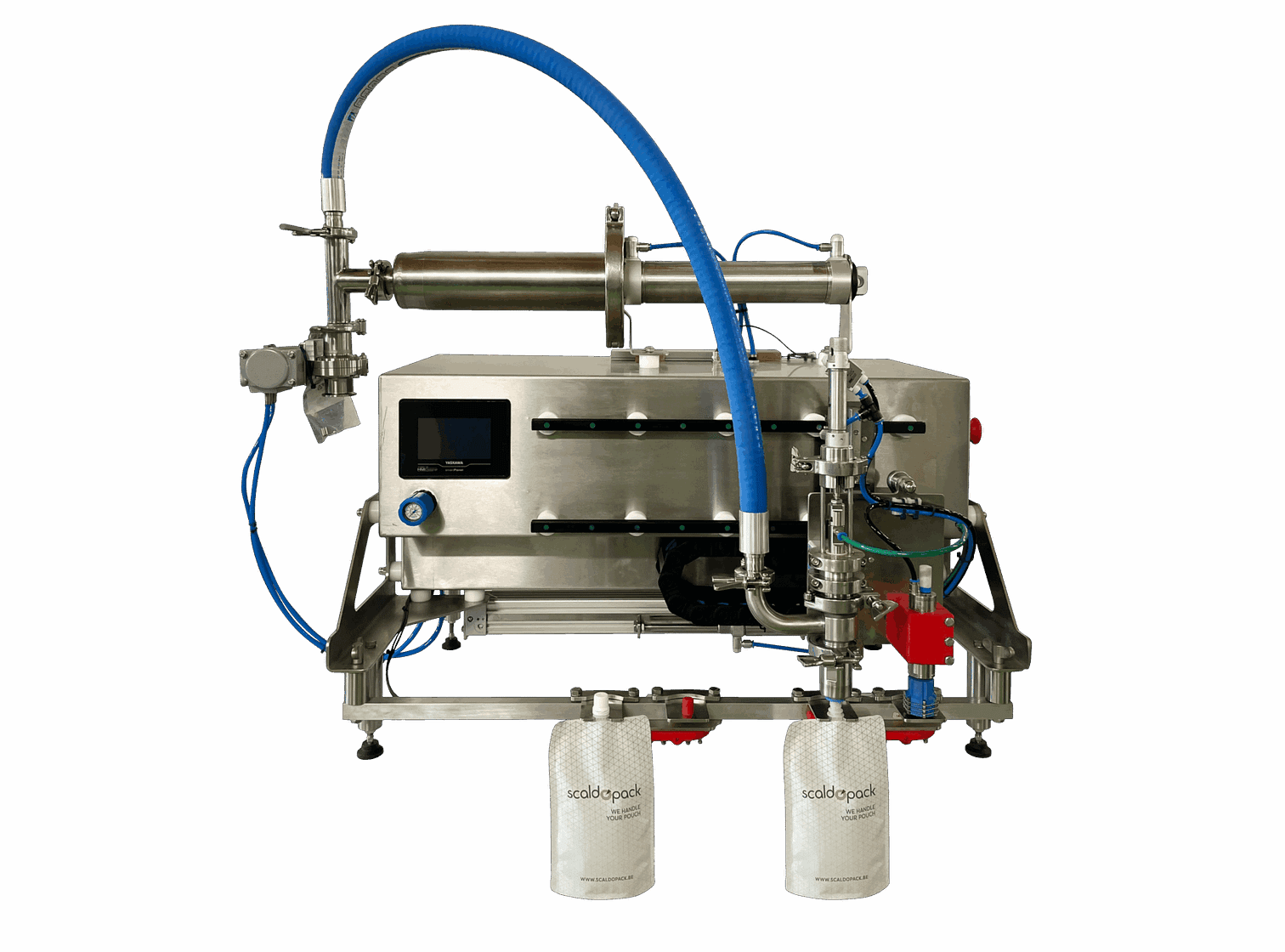
Photographs show examples of existing components. The supplied pump, materials and options are defined in the agreed machine configuration.
Measuring volume and mass
The dosing principle defines how the system controls the quantity in each pack. A piston can dose by displacement; another configuration can use a flowmeter, product supply and a controlled filling valve.
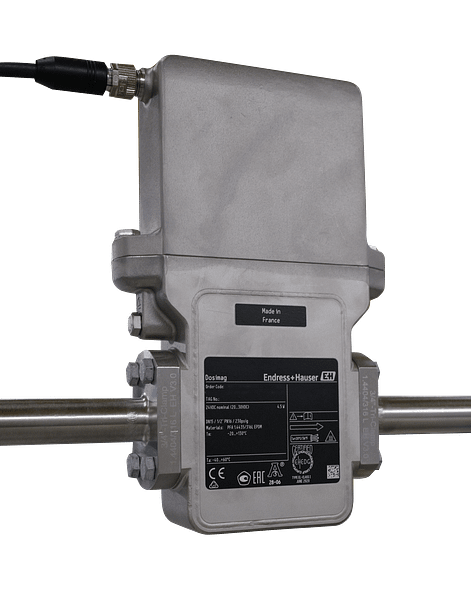
Electromagnetic flowmeter
VOLUME
Measures the volume flow of an electrically conductive liquid. Selection includes conductivity, flow range and installation conditions.
The measuring tube must remain completely filled during measurement. Air, foam and process disturbances need to be considered.
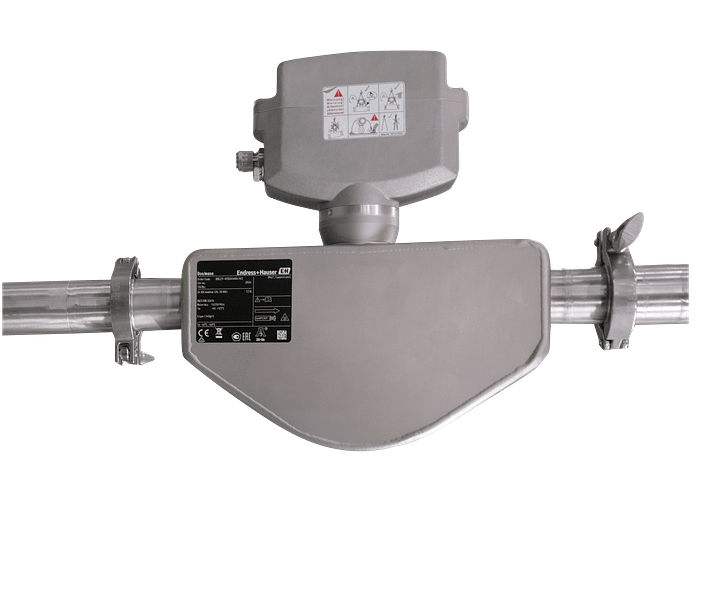
Coriolis mass flowmeter
Direct mass measurement
Measures mass flow directly and does not rely on the liquid’s electrical conductivity. Selection includes flow range, product properties and pressure loss.
Air bubbles and changing gas content can affect the result and require assessment for the selected device.
The filled pack is the result that matters.
Meter performance, product supply, valve response and control settings together determine the actual quantity filled into each package.
Filling accuracy: How closely the actual filled quantity matches the target quantity per package.
Repeatability: How much repeated fills vary under the same conditions.
Agree the product, filling quantity, production speed, sampling method and operating conditions used to assess performance.
Plan cleaning and changeovers from the start.
Pumps, valves, hoses, meters, seals and nozzles form one product path.
Define how the system will be cleaned between batches and products. Depending on the configuration, this can involve manual disassembly, a suitable CIP circuit or replacement of a tubing assembly.
- Cleaning chemicals
- Temperature
- Allergen changes
- Inspection
Product supply, particles & hot filling
Product supply may use gravity, vessel pressure or a feed pump. The arrangement is selected around the product, vessel position, pipework and required output.
For products with particles, specify particle size, shape, concentration and fragility. Pumps, valves and nozzles must all allow those product particles to pass.
For hot filling, confirm the temperature rating of the complete installation. Filling temperature and cleaning conditions are separate requirements.
Discover our filling machines
Smartfiller Ecoline — Tabletop filling with manually loaded pouches.
Smartfiller Next Gen — Servo-driven filling and capping.
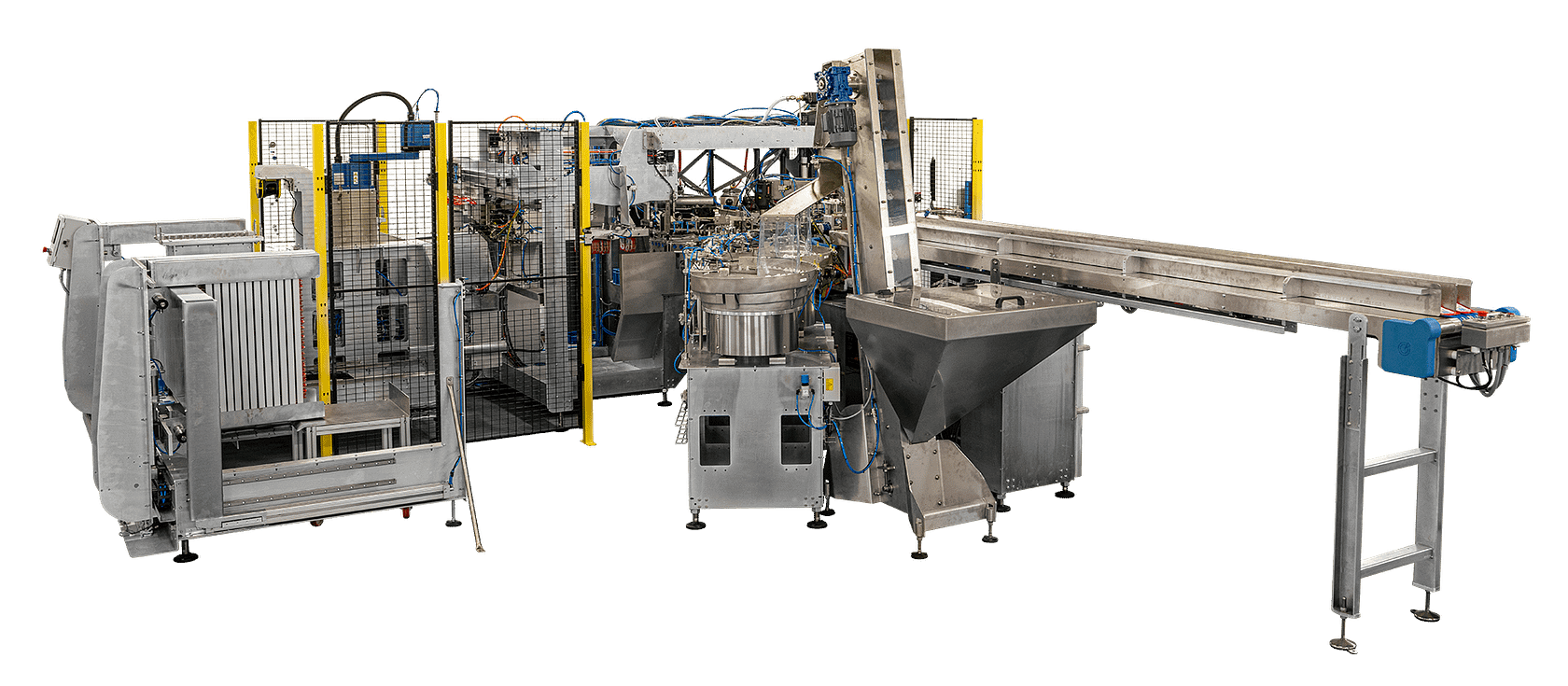
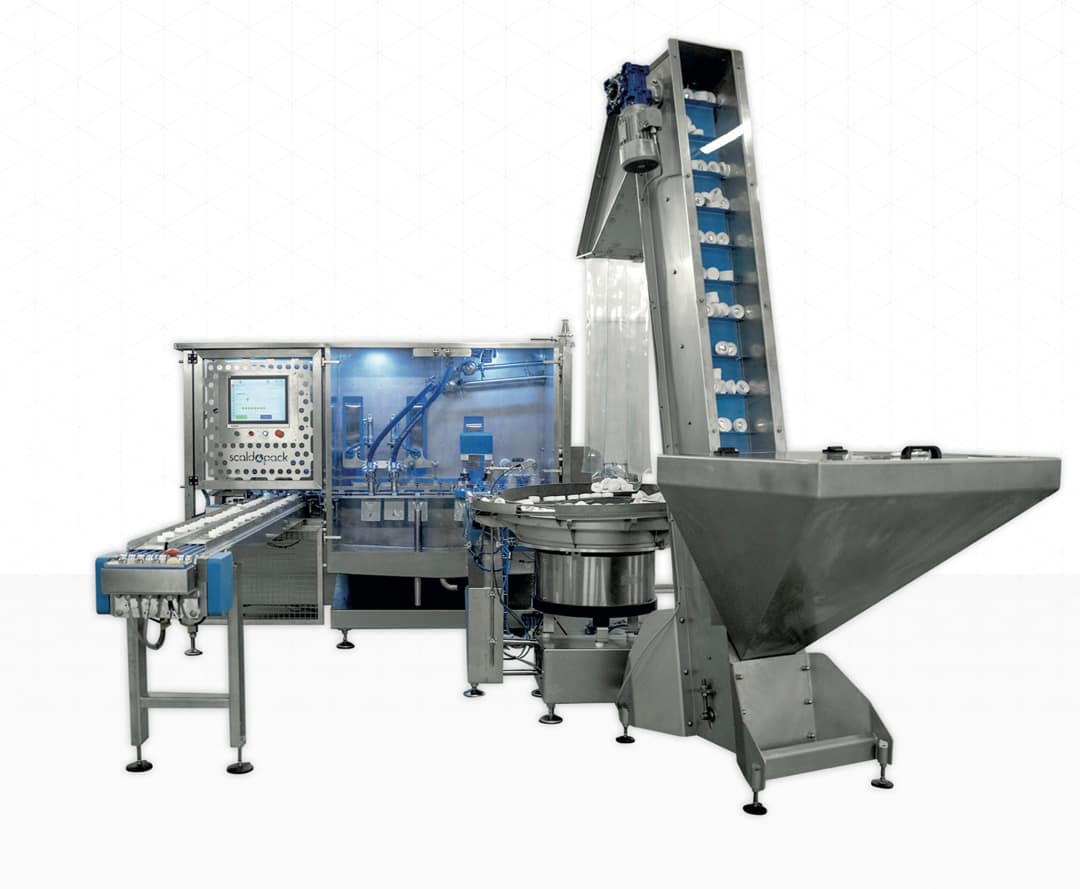
Monofiller — Automatic filling and capping.
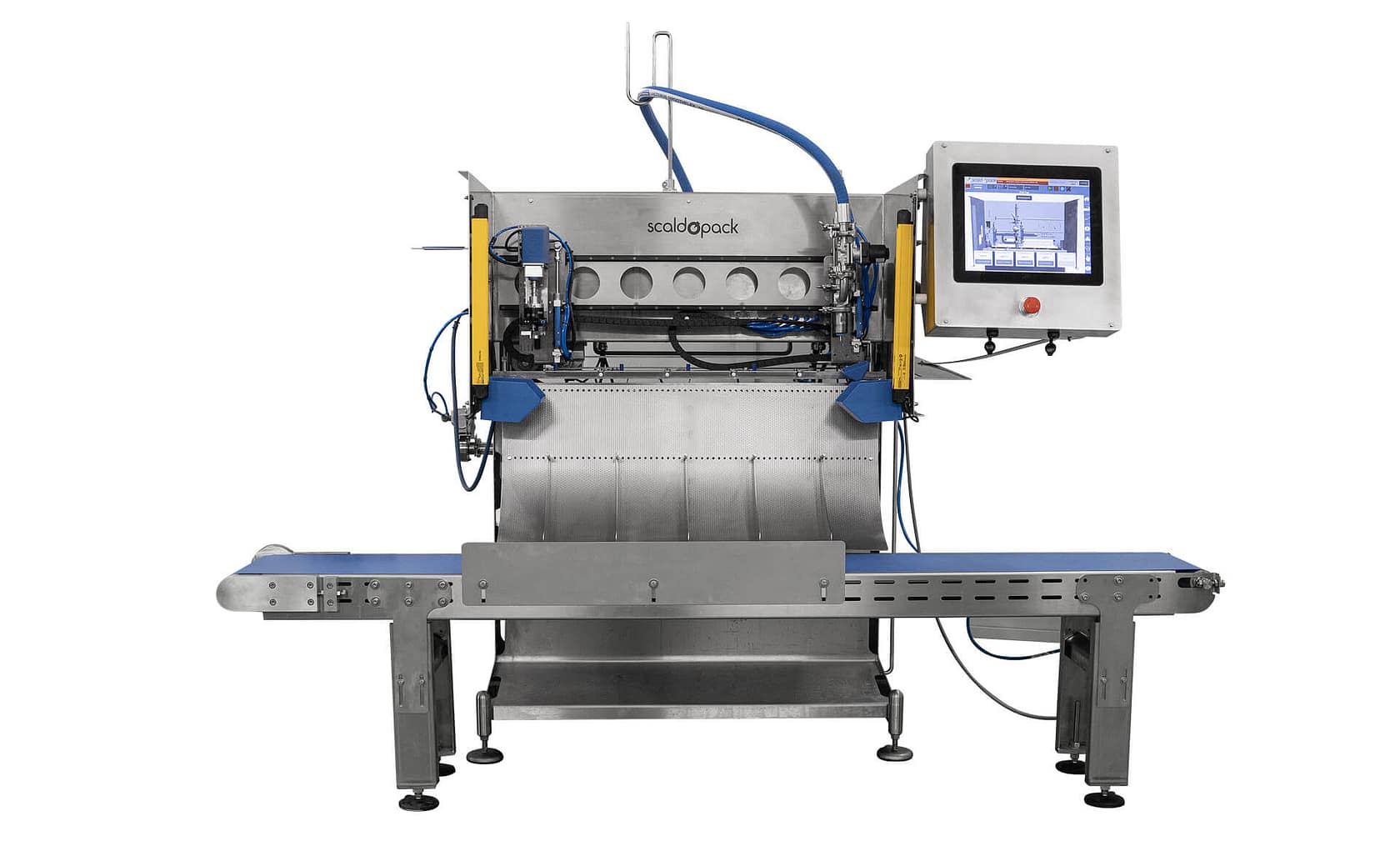
Multihead 2 — Multihead filling for your required output.
Frequently asked questions
Start with the product. Define the system together.
Which pump should I consider for a viscous product?
Start with viscosity at the actual filling temperature, product texture and any particles. Piston, rotary lobe and twin screw configurations are among the options to assess. Product supply and the passages through valves, nozzle and spout also influence the choice.
Can one pump handle several products?
A configuration can cover multiple products within a defined operating range. Differences in viscosity, dose, temperature or cleaning can require new settings, change parts or another filling arrangement.
Can I fill directly from an IBC?
This depends on how the product flows and reaches the machine. Product level, pipe diameter, distance, height difference and filling rate determine whether direct supply, a hopper or a feed pump is appropriate.
Does every filling machine need a flowmeter?
The requirement follows from the dosing principle. A piston can control a displaced volume, while a flowmeter-based system uses measured flow to control the fill. Scaldopack selects the arrangement for the application.
What filling accuracy can I expect?
Agree the required tolerance, dose and test conditions with Scaldopack. Product behaviour, supply stability, calibration and valve response affect the filled-pack result. Evaluate both accuracy and repeatability for the complete system.
How is the product path cleaned?
The method follows the product and configuration. Options can include manual disassembly, an appropriate CIP circuit or replacement of tubing. Specify cleaning chemicals, temperatures, allergen changes and inspection requirements during project preparation.
Get in touch with Scaldopack
Send the information you already have. Start with these four points.
- Product: Product name, filling temperature and key characteristics.
- Volume or mass: Volume or mass per pack and required tolerance.
- Output: Target packs per minute or production per shift.
- Packaging: Pouch, spout, cap or container specifications.
Have more technical information?
Include viscosity at temperature; particle size, shape, concentration and fragility; density if relevant; foaming or shear sensitivity; supply vessel and pipework; utilities; and cleaning or allergen changeovers.